What’s the Distinction Among Web Design versus Web Development?
For Buffalo, NY businesses, the difference between web design and web development is not just a technical detail. It affects how your website looks, how it works, how well it supports SEO services and digital marketing, and how effectively it turns visitors into leads. If you help customers in Downtown Buffalo, North Buffalo, or across the greater Western New York market, your website is often the initial impression people have of your brand.
Web design emphasizes the look, feel, and user experience (UX) of a site. Web development turns those ideas into a working website through code, functionality, and integrations. Both are essential, but they solve different problems. A beautiful site that breaks on mobile is unacceptable. A highly functional site that is hard to navigate can also hurt engagement and lead generation.
Understanding the difference helps business owners select the right starting point, set realistic budgets, and build a stronger digital presence. It also helps you work more effectively with designers, developers, and AI experts who can improve website performance, automation, and personalization.
What exactly is web design?
Web design is the planning and development of the visual and user-facing side of a website. It sets the visual layout, branding, navigation, and user interface (UI) so visitors can quickly understand your identity and the next step. Good design boosts usability, supports visual branding, and guides the user journey toward a form fill, phone call, booking, or purchase.
50 Fountain Plz #1400, Buffalo, NY 14202
(315) 758-3349
https://maps.app.goo.gl/y9HMhvcoPCh9V3eKA
https://sunstonedigitaltech.com/buffalo-marketing-agency/web-design
42.8898193, -78.8738661
In simple terms, web design includes the layout of each page, the placement of calls to action, color choices, typography, and the structure of key content. Designers also outline the website structure so users can move without friction from services to contact pages without confusion. For a Buffalo contractor, healthcare provider, restaurant, or professional services firm, that clear navigation can make the difference between a bounce and a conversion.
Design work often starts with wireframes, which are clean page outlines that show where content, menus, and key elements will go. After wireframes, designers may create prototyping assets to evaluate flow, messaging, and interactive elements before development begins. This process refines usability and limits expensive changes later.
Modern web design also includes mobile-first design thinking. Since many people search for local businesses on their phones, especially while comparing options across Buffalo and nearby suburbs, the design must work well on smaller screens first. That means bigger tap targets, readable text, fast-loading images, and streamlined navigation. In other words, web design is about more than appearance; it’s about providing a smooth experience that encourages engagement and trust.
Designers often think in terms of how a page supports search visibility and conversions, even if they are not writing technical code. A clear hierarchy, strong headings, accessible color contrast, and intuitive navigation all help users and search engines understand the page. That is why web design is closely tied to performance, accessibility, and conversion rate optimization.
What exactly is web development?
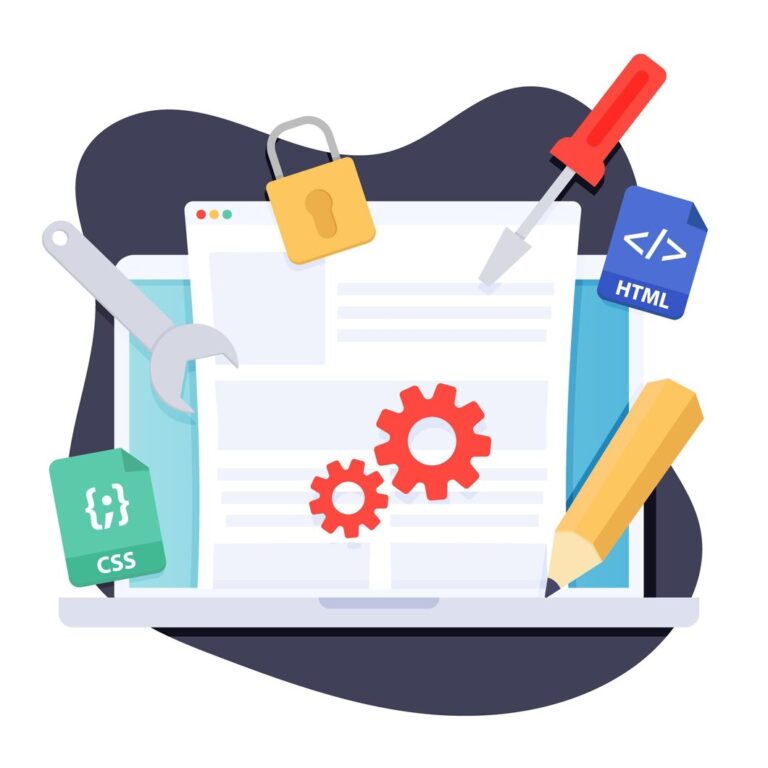
Web development is the specialized process of developing the website so it functions properly. While design determines how the site should look, development uses HTML, CSS, JavaScript, and various tools to transform that vision into reality. Development is where the site’s interactive features, forms, databases, and systems connections are developed and tested.
Front-end development centers on the part of the website users see and interact with in their browser. It converts the design into actual pages, buttons, animations, menus, and layouts. Front-end developers use HTML for structure, CSS for styling, and JavaScript for interactive behavior such as sliders, accordions, dynamic filters, and form validation.
Back-end development manages the behind-the-scenes logic that powers the website. It manages backend systems, databases, logins, order processing, scheduling tools, and other features that users rely on without seeing directly. This is where server-side code ties the front end to business processes, making the website usable, secure, and scalable.
Development also includes working with a CMS, or content management system, so your team can edit content without rebuilding the site every time. For Buffalo businesses that need to publish blog posts, service updates, new location pages, or seasonal promotions, content management is a big benefit. A flexible CMS supports long-term growth and makes it easier to keep the website aligned with digital marketing goals.
Many websites also rely on API integrations to link with CRM platforms, payment processors, scheduling software, chat tools, and inventory systems. These integrations improve functionality and reduce manual work. For example, a Western New York healthcare office might connect appointment booking and intake forms, while a local retail business could integrate a store locator or e-commerce system.
In short, development is the engine under the hood. It affects performance, security, scalability, and how well the website can support the business as it grows.
How design and website development go hand in hand
Collaboration between designers and technical teams is what produces a successful website. The design gives the site its appearance, structure, and emotional impact. Development turns that concept into a site with real website functionality. When the two teams coordinate effectively, the result is a site that appears polished, performs smoothly, and drives business goals.
This teamwork usually starts early. Designers create page sketches and mockups based on the brand, goals, and target audience. Developers review those plans to make sure the proposed features are realistic, effective, and simple to update. That early collaboration stops problems such as beautiful layouts that are hard to build or complex features that slow down the site.
Responsive design is one of the clearest examples of design and development working together. Designers plan how content should reflow across phones, tablets, and desktops. Developers then code those flexible layouts so the experience stays consistent across devices. For businesses serving customers throughout Buffalo and the surrounding region, responsive design is essential because people browse from many screen sizes and connection speeds.
A strong website also depends on technical excellence behind the scenes. A designer may prioritize clarity and visual hierarchy, while a developer ensures the site is built effectively, with well-written code and refined scripts. Together, they influence site speed, accessibility, and usability. That combined effort delivers a better user journey and a stronger digital presence.
Think of web design as the blueprint and web development as the construction. One plans the experience; the other builds the structure that makes it work.
When design and development are aligned, the website is more likely to encourage lead generation, increase engagement, and grow as your business changes. That matters for home services companies, medical practices, hospitality brands, and local retail stores across Western New York.
What does your Buffalo business need to start with?
It depends on your company objectives, launch schedule, and available budget. If you're starting from zero, refreshing an old website, or expanding into new service areas, you may need both. However, the order is important.
When your brand message lacks clarity, your current website looks outdated, or your pages do not guide users effectively, begin with web design. A strategic design phase helps clarify messaging, page hierarchy, and conversion paths. That matters particularly for Buffalo businesses that want to stand out in crowded industries like healthcare, professional services, home improvement, and local retail.
If your design is solid already but the site lacks features, speed, or integrations, web development may be the first priority. As an example, you may need booking tools, a custom quote system, improved CMS workflows, or API integrations with your CRM. In that case, the focus is on functionality rather than visual changes.
Some businesses benefit from a phased approach. A local restaurant in North Buffalo may want a quick design refresh and mobile optimization before a busy season. A larger Western New York contractor may need development work first to support multi-location pages, quote forms, and service-area discovery. A healthcare provider may need both a better patient experience and secure backend systems.
Your launch timeline also matters. If you need a website live quickly for a campaign, event, or seasonal promotion, the project may start with a simpler design and a development scope that covers essential features first. When you have extra time, you can invest in deeper discovery, prototyping, and more advanced functionality.
Budget is another key factor. Design and development both require skilled professionals, and the right mix depends on where your site has the biggest gaps. Putting money into visual changes without improving performance or content management can hold back results. Similarly, heavy development without a clear UX plan can create a website that works technically but fails to convert.
How site design affects SEO services and digital marketing
Site design has a strong effect on SEO services and digital marketing because search engines and users both evaluate how the site is built and used. In fact the strongest content plan will struggle if people cannot locate the relevant information fast or if the site performs poorly on smartphones.
Good layout supports search visibility by enhancing formatting, legibility, and technical transparency. Simple headings, logical page hierarchy, and easy navigation help for search engines to interpret your content. Strong design also supports technical SEO indirectly by allowing developers build more efficient, faster pages that are easier to crawl and index.
Design serves a significant part in conversion rate optimization also. The page can attract traffic, but if the form is hidden, the CTA is not obvious, or the page seems overwhelming, visitors may leave without acting. Visual choices such as button placement, contrast, spacing, and mobile-friendly layouts all affect whether users take action. This is especially important for Buffalo businesses relying on calls, bookings, estimates, or walk-in traffic.
Web design also enhances the content strategy. How you structure service pages, blog posts, FAQs, and location pages can increase relevance and make your content quicker to review. For local search intent in Buffalo, NY, this matters for map visibility, service-area discovery, and landing page performance. Companies aiming to connect with people searching for nearby solutions need pages that are easy to navigate and clearly tied to https://syracuse-ny-kv391.publishlane.com/posts/bespoke-destination-pages-for-seo-built-to-generate-results-in-buffalo-ny the right services and neighborhoods.
For digital marketing promotions, a well-designed site strengthens the visitor experience from ad click to conversion. If traffic comes from paid ads, social platforms, or email, your website needs to continue the story the campaign started. If the page is confusing, users may not trust the offer. If the page is professionally designed, the brand message feels aligned and credible.
In short, web design is not separate from SEO and marketing. It is one of the main pillars that helps those efforts achieve outcomes.
How AI experts play in current websites
Today, AI experts are helping businesses adopt smarter tools to enhance websites without losing the human touch. The best results come from blending AI with strategic design and solid development. AI does not take over strategy, but it can accelerate tasks, refine workflows, and tailor the visitor experience.
AI tools can help with content organization, chat support, analytics insights, image generation, and testing ideas for messaging or layout. As an example, a business may use AI-driven tools to identify common user questions, propose content improvements, or spot patterns in visitor behavior. That data can guide both design and development decisions.
Automation is a further major benefit. AI-powered systems can direct leads, schedule appointments, initiate follow-up emails, or sort support requests. For Buffalo companies that handle a regular flow of inquiries, automation can save time and improve response speed. It can also cut down on manual work for staff, which is useful in service businesses where every hour counts.
Personalization is where AI becomes especially valuable. A website can adjust content, recommendations, or calls to action based on user behavior, location, or previous visits. That makes the digital experience more pertinent and can improve engagement and lead generation. For instance, a Western New York business may present different service prompts to users in Buffalo than to users in nearby suburbs.
AI also supports scalability. As your website grows, AI-powered insights can help you strengthen content, optimize site structure, and discover opportunities for better performance. Still, AI works best when designers and developers use it intentionally. A site should remain accessible, trustworthy, and in line with your brand voice.
Which Buffalo, NY organizations should seek in a digital partner
Buffalo businesses should look for a web partner who understands both visual design and web development, plus the realities of local competition. The ideal partner will look past appearance and technical details to support your ongoing digital presence, local search visibility, and expansion goals.
Start with local SEO. An experienced web partner should know how to build service pages, location pages, and contact information so your business can appear in local search results and map visibility. That matters whether you cover Downtown Buffalo, North Buffalo, or the greater Western New York market. Local search intent is often very specific, and your website should assist search engines match you to those queries.

After that, evaluate mobile performance. Mobile-optimized websites are important because users searching local businesses across Buffalo and nearby suburbs need fast, easy experiences on their phones. Your partner should plan and implement for mobile optimization from the start, rather than later. If the site is sluggish or feels clunky on mobile, potential customers may bounce before contacting you.
Inquire about site upkeep too. A website is never a single project. It requires refreshes, data backups, security reviews, plugin handling, content edits, and speed monitoring. Dependable ongoing maintenance protects overall performance and supports lasting performance. This is especially important for businesses that count on current promotions, seasonal service pages, or compliance updates.
You should also ask in what way the partner handles hosting, security, content management, accessibility, and scalability. A good website should be built to scale with your business, not hold it back. Whether you are in home services, healthcare, hospitality, or professional services, your website should enable future campaigns and operational needs.
Finally, look for a provider who can link web design and web development to trackable business results. Strong teams can show how their decisions affect findability, conversion optimization, user engagement, and the user journey. That’s the distinction between a nice-looking website and a valuable asset.
Questions and answers about web design vs web development
Is it web design the same as web development?
No, they are different. Web design focuses on the visual layout, brand identity, UI, and UX. Web development relies on code such as HTML, CSS, and JavaScript to create the functionality of the site. Design maps out the experience; development brings it to life.
Should I get a web designer or a web developer first?
It depends on your goals. If your messaging, layout, or navigation needs work, start with a web designer. If your site needs better functionality, CMS improvements, API integrations, or backend systems support, start with a web developer. Many Buffalo businesses see value in both in the planning stage.
How does web design impact SEO services?
Web design affects SEO services by shaping site structure, navigation, usability, mobile optimization, and content hierarchy. A well-designed site improves search visibility, supports technical SEO, and helps users find the right information faster. That can lead to better engagement and more conversions.
How much should Buffalo businesses budget for a new website?
Pricing depends on project scope, features, content needs, and whether you need design, development, or both. A simple brochure site costs less than a custom build with advanced functionality, CMS workflows, or automation. The best budget is based on business goals, launch timeline, and long-term maintenance needs.
Can AI experts help with web design and development?
Yes, they can. AI experts can help with AI tools, automation, personalization, analytics, and workflow improvements. They can support both design and development by identifying opportunities to improve performance, usability, and content strategy. The best results come when AI is used alongside human strategy and strong website planning.